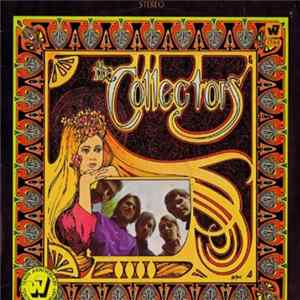
» » The Collectors - Looking At A Baby / Old Man

The Collectors - Looking At A Baby / Old Man FLAC album
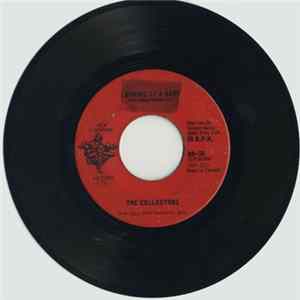
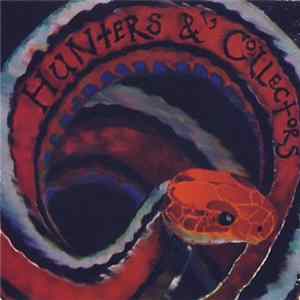
Performer: The Collectors
Genre: Rock / Pop
Title: Looking At A Baby / Old Man
Country: Canada
Released: Mar 1967
Style: Beat, Psychedelic Rock
Label: New Syndrome Records Ltd.
Catalog Number: NS-16
FLAC version ZIP size: 1095 mb
MP3 version ZIP size: 2516 mb
WMA version ZIP size: 1351 mb
Rating: 4.3
Votes: 864

Tracklist

1Looking At A Baby2:05
2Old Man2:31

Versions

CategoryArtistTitle (Format)LabelCategoryCountryYear
121117The Collectors Looking At A Baby / Old Man ‎(7", Single)Riviera 121117FranceUnknown
V-760The Collectors Looking At A Baby / Old Man ‎(7")Valiant Records V-760US1966
V-760The Collectors Looking At A Baby / Old Man ‎(7", Single, Promo)Valiant Records V-760US1966

Notes

P.O. Box 3056 Vancouver, B.C.

Video

OCARO
Looking At A Baby by The Collectors (http://vancouversignaturesounds.com/hits/looking-baby-collectors/)

Peak Month: April 1967
10 weeks on CFUN chart
Peak Position ~ #8
Peak Position on Billboard Hot 100 ~ did not chart
YouTube.com: “Looking At A Baby”

The Vancouver rock band The Collectors, was formerly named The Classics who were a Vancouver group led by Howie Vickers in the mid-60s. The Classics were part of the regular line-up on Let’s Go, a show on CBC TV. Though the Classics released several singles the group needed room to grow and reformed as The Collectors. They would become one of the most innovative of Vancouver’s recording acts through the rest 60s. In the spring of 1967, Vickers was asked to put together a house band at the Torch Cabaret in Vancouver. Along with Claire Lawrence on horns, they recruited guitarist Terry Frewer, drummer Ross Turney and Brian Newcombe on bass. Within a couple of months, fellow Classics member Glenn Miller replaced Newcombe on bass and Bill Henderson, a student at UBC, replaced Frewer on guitars. With Vickers now handling vocals, their sound changed from doing covers of R&B tunes to psychedelic rock. This led them to gigs along the Canadian and US west coast. Their strongest fan base in America was in California. There audiences welcomed their complex arrangements mixed with harmonies and extended solos and musical ad-libs.

The band headed to Los Angeles to make some recordings with Barry De Vorzon at Valiant Records. Music critic, Richard Skelly (Richmond Review, Radio West.ca, RPM Magazine), reveals that the “band didn’t have an actual name when they demoed a few songs for New Syndrome, a production firm owned by singer Tom Northcott and entrepreneur Jack Herschorn. An American ex-pat, Herschorn pitched the demo tape to assorted Los Angeles labels. Valiant bit…and brought the band down for some initial sessions. At the time, the boys were honing their style by playing behind amateur strippers at the Torch Cabaret. … patrons simply called them “The Torch Band.” After recording “Looking At A Baby,” Valiant (probably De Vorzon himself) gave them two options for a name: The Connection or The Collectors. Not so coincidentally, Valiant’s other up-and-coming band was called The Association.” Howie Vickers recalls “We couldn’t agree ‘collectively’ on a name…They were about to press the record and (so) The Collectors it was.” Out of the recording sessions with Valiant Records, The Collectors had two singles that made the Top 40 in Vancouver in 1967. The first released early in the year was Looking at a Baby,” followed in August ’67 by “Fisherwoman.”

Looking At A Baby by The Collectors

Look at a baby, what do you see,
what do you see looking at a baby?
I can see the world the way that I would like the world to be.
Innocent and pure and clean just like a newborn baby.

Look at a lady, what do you see,
what do you see looking at a lady?
I can see the girl the way that I would like the girl to be.
Warm and tender, faithful, true, just like a well born lady.

Look at a ruby, what do you see,
what do you see looking at a ruby?
I can see the world the way that I expect the world to be.
Fiery furnace, crimson hot, just like a blood red ruby.

Look at a baby, what do you see,
what do you see looking at a baby?

“Looking At A Baby” was co-written by Bill Henderson and Howie Vicksberg. Richard Skelly, writes “Vickberg is the actual surname of Howie Vickers.” Bill Henderson went on to lead the band when they morphed into Chilliwack in 1970. “Looking At A Baby” offers up similes of a baby, a lady and a ruby as ways of contemplating the world. A baby offers us innocence, purity and freshness, a lady offers a wish for warmth, tenderness and faithfulness. A ruby is a fiery furnace and crimson hot, perhaps a sign the band was predictive about global warming (little joke). The world can be thought of in many things: a jungle, a war-zone, a garden, an oyster. Can the image we contemplate when we think about the world draw us nearer to the energy of that image? Thinking about the world being like a baby can offer hope and promise. The Collectors, in offering the simile of a lady as one way to think about the world, echo an ancient image for the world: “mother earth.” And a ruby is one of the gemstones and is the birthstone for July. A ruby’s value comes from the brightness of its red color. If a ruby isn’t red enough it is called a pink sapphire. In addition to color, a ruby is valued based on its cut and clarity. A ruby comes from the earth and is of the world.

The song was on the radio in Vancouver in 1967, several years after President Lyndon Johnson sent American troops into combat in Vietnam in March 1965. With draft dodgers arriving in Vancouver, radio listeners were aware of international politics that were casting troubling images for the world. In contrast to the troubling images for the world portrayed by the news of the world, the Collectors offered images of what they were liking and expecting the world to be. The song offered hope that the world didn’t have to remain static. It could change for the better.

The American poet, William Stafford wrote a poem titled “A Valley Like This.” It is one of the seven Methow Valley poems by William Stafford. The poems are placed along the watershed of the Methow Valley, from Washington Pass to the Columbia River. “The Forest Service approached Stafford in 1992, a year before his death, to write a series of poems that would reflect the landscape and spirit of the North Cascades.” In the poem he invites readers to consider a valley and how the world came into being. He wonders how the world is shaped and shifted and asks “what can a person do to help bring back the world?”

Sometimes you look at an empty valley like this,
and suddenly the air is filled with snow.
That is the way the whole world happened—
there was nothing, and then…

But maybe some time you will look out and even
the mountains are gone, the world become nothing
again. What can a person do to help
bring back the world?

We have to watch it and then look at each other.
Together we hold it close and carefully
save it, like a bubble that can disappear
if we don’t watch out.

Please think about this as you go on. Breath on the world.
Hold out your hands to it. When mornings and evenings
roll along, watch how they open and close, how they
invite you to the long party that your life is.

In 1967, The Collectors were doing their part to help bring back the world by offering images in “Looking At A Baby” to appeal to our better natures.